
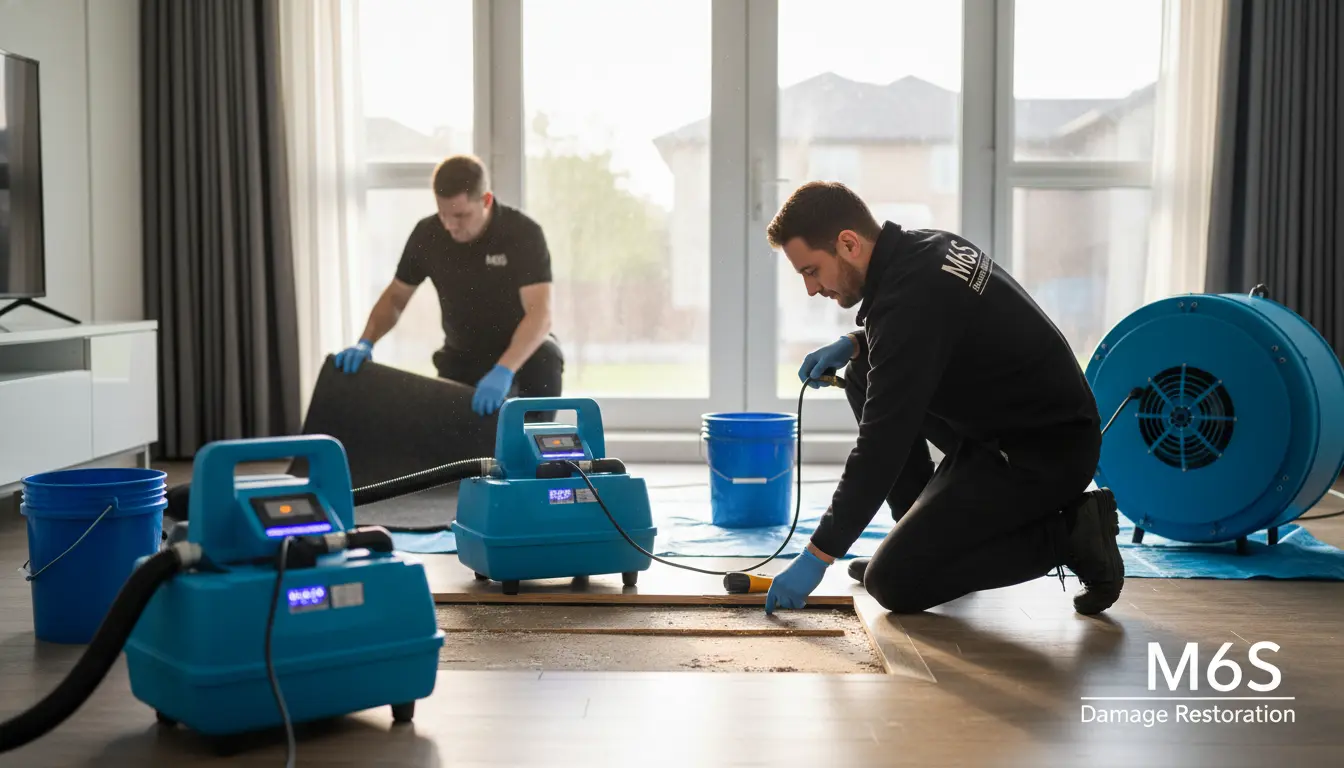
Imagine waking up to the sound of rushing water in your Mississauga home, only to discover that heavy Toronto-area rainfall has turned your basement into a swimming pool. Flooding is a common nightmare in the Greater Toronto Area, especially during our unpredictable wet seasons. But don’t panic—swift action can save your property and your sanity. At M6S Damage Restoration, we’ve helped countless homeowners in Mississauga and surrounding Toronto neighbourhoods recover from water damage. In this comprehensive guide, we’ll walk you through the restoration process step by step, offering practical tips to get your home dry and livable again.
Whether it’s a burst pipe, sewer backup, or storm surge, understanding the restoration process empowers you to make informed decisions. We’ll cover everything from initial assessment to final repairs, with a focus on safety and efficiency. Let’s dive in and turn that flood into a distant memory.
Step 1: Ensure Safety and Evacuate if Necessary
The first priority after a flood is safety. Standing water can hide electrical hazards, structural weaknesses, or even contaminants from sewage. In Mississauga’s urban setting, where homes are often close together, it’s crucial to act quickly to prevent further issues spreading to neighbours.
Immediate Actions to Take
- Turn off the power: If safe, switch off electricity at the main breaker to avoid shocks. Never wade through water near outlets or appliances.
- Evacuate vulnerable areas: Move family members, pets, and valuables to higher ground. In Toronto’s variable climate, floods can rise fast—better safe than sorry.
- Document the damage: Snap photos and videos for insurance claims. This step is essential for Mississauga residents dealing with local insurers familiar with GTA flood patterns.
Practical tip: If the water level is above your ankles or smells off, call professionals immediately. Delaying can lead to mould growth, which thrives in our humid Ontario summers.
Step 2: Assess the Extent of the Damage
Once safety is secured, it’s time to evaluate what’s been affected. This step helps you understand the scope and plan accordingly.
Conducting a Thorough Inspection
Start with a visual check: Look for warped floors, stained walls, and soaked furniture. In basements, common in Mississauga bungalows, water often pools quickly due to clay soil in the Peel Region.
- Check hidden areas: Peek behind baseboards and under carpets for moisture. Toronto’s older homes in areas like Etobicoke may have outdated drainage, exacerbating hidden damage.
- Test for structural integrity: Gently press on walls and floors. If anything feels spongy, it could indicate compromised beams.
Actionable advice: Use a moisture meter if you have one—affordable models are available at local hardware stores. For precise detection, consider our moisture detection services, which use advanced tools to uncover issues invisible to the naked eye.
Local reference: With Toronto’s frequent spring thaws, properties in low-lying Mississauga spots near the Credit River are prone to basement flooding. Early assessment can prevent costly rebuilds.
Step 3: Water Extraction and Removal
Removing standing water is critical to halt further damage. The longer water sits, the more it seeps into materials like drywall and wood.
Tools and Techniques for Extraction
- Use pumps and wet vacuums: Rent industrial-grade equipment from GTA suppliers. For smaller floods, shop vacs work in a pinch.
- Prioritize high-risk areas: Start with the basement or lowest levels, where water gravitates.
If your property has extensive carpeting, as many Toronto row houses do, professional intervention is key. Our carpet drying solutions ensure thorough extraction without damaging fibres.
Tip: Wear protective gear—rubber boots, gloves, and masks—to avoid exposure to bacteria. In Mississauga’s connected communities, contaminated water from municipal systems can pose health risks.
Step 4: Drying Out Your Property
Extraction is just the beginning; drying prevents mould and rot. This phase can take days to weeks, depending on humidity levels.
Effective Drying Methods
- Set up fans and dehumidifiers: Position high-capacity units to circulate air. In our Canadian climate, ambient humidity often prolongs this step—aim for below 60% relative humidity.
- Open windows strategically: On dry Toronto days, ventilation helps, but avoid during rainy spells common in the GTA.
For basements, which are notoriously damp in Mississauga due to groundwater, specialized restoration is often needed. Explore our basement flood restoration services tailored for Toronto-area homes, ensuring complete dryness without compromising insulation.
Practical advice: Monitor progress with a hygrometer. If drying stalls, it might indicate trapped moisture—time to call in experts.
Step 5: Cleaning and Sanitizing
Floodwater often carries pollutants, so thorough cleaning is non-negotiable to protect your health.
Disinfecting Affected Areas
- Remove porous items: Discard soaked carpets, drywall, and insulation if saturation exceeds 24 hours—they’re mould magnets.
- Apply antimicrobial agents: Use EPA-approved cleaners on hard surfaces. For sewage-involved floods, professional sanitization is vital.
In Toronto’s diverse neighbourhoods like Riverdale, where heritage homes abound, preserving original materials during cleaning requires care. Our biohazard cleanup services handle contaminated water safely, using hospital-grade disinfectants.
Tip: Ventilate well during cleaning to disperse fumes. Always rinse surfaces to avoid residue buildup.
Step 6: Repairs and Reconstruction
With the property dry and clean, focus on rebuilding stronger than before.
Restoring Structural Elements
- Replace damaged materials: Install new drywall, flooring, and insulation. Opt for flood-resistant options like elevated electrical outlets.
- Address root causes: Fix leaks or improve grading around your foundation. In Mississauga, consulting local bylaws ensures compliance.
For valuable documents affected by the flood, specialized recovery can salvage irreplaceable items. Check out our document recovery methods to freeze-dry papers and photos.
Actionable advice: Hire licensed contractors for electrical and plumbing work. In the GTA, certified pros understand Toronto’s building codes, preventing future headaches.
Local tip: Properties in Leslieville often face flooding from combined sewer overflows—reinforce sump pumps for resilience.
FAQ: Common Questions About Flood Restoration in Mississauga
How soon after a flood should I start restoration?
Act within the first 24-48 hours to minimize damage. Mould can begin growing in as little as 24 hours in our humid climate.
Will my insurance cover water damage restoration?
Most Toronto-area policies do, but check for exclusions like floods from poor maintenance. Document everything for claims.
Can I handle minor flooding myself?
For small incidents, yes—but for anything involving sewage or structural concerns, call professionals like M6S Damage Restoration to avoid health risks.
How long does the full restoration process take?
It varies: extraction in hours, drying in days, repairs in weeks. Our team in Mississauga streamlines it for faster recovery.
What if my flood involves hazardous materials?
Contact experts immediately. We specialize in safe biohazard cleanup to protect you and your family.
Conclusion: Take Control and Restore with Confidence
Restoring a flooded property in Mississauga doesn’t have to be overwhelming. By following these steps—prioritizing safety, assessing damage, extracting water, drying thoroughly, cleaning meticulously, and repairing wisely—you can reclaim your home. Remember, in the Greater Toronto Area, where weather whims can strike anytime, preparedness is your best defence.
At M6S Damage Restoration, we’re here to support Mississauga and Toronto residents every step of the way. Our IICRC-certified team uses cutting-edge technology for efficient, compassionate service. Don’t let water damage disrupt your life—contact us today at (437) 524-9928 for a free assessment. Let’s get your property back to dry and beautiful!