
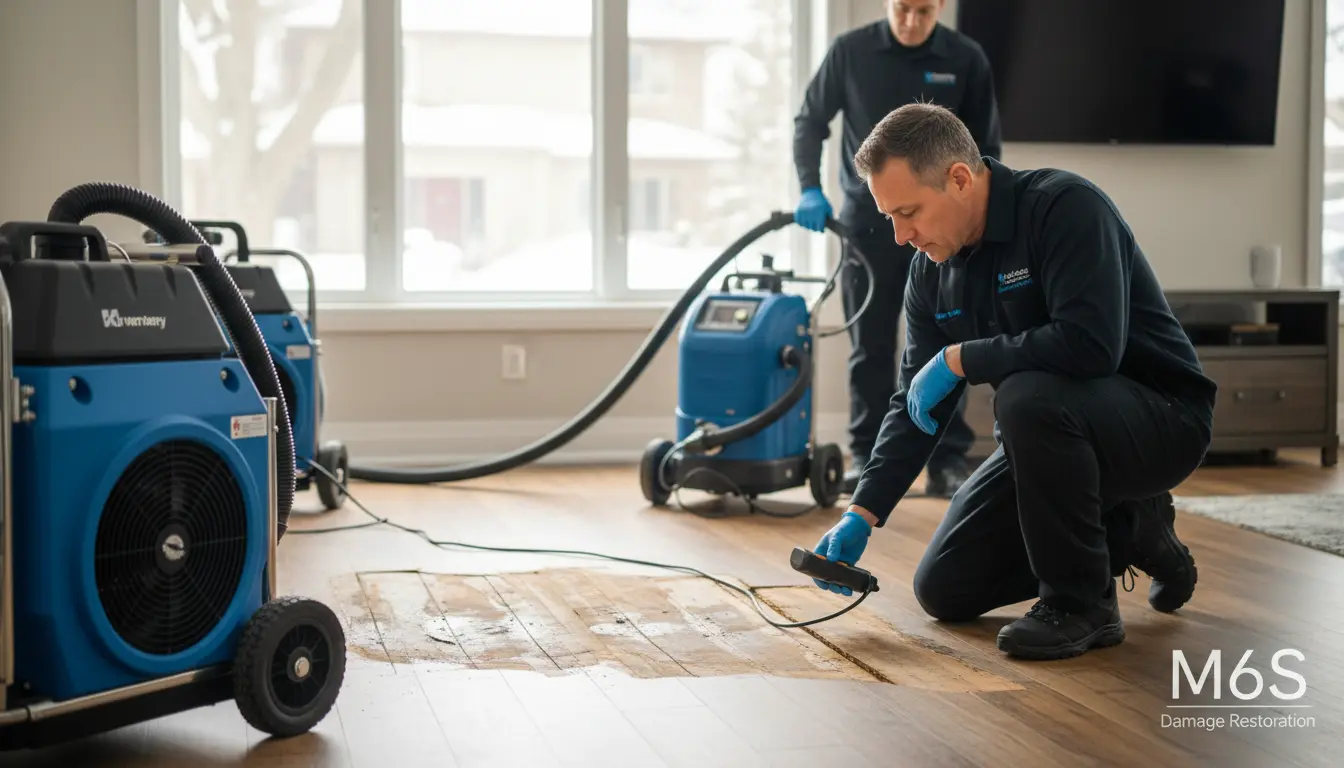
As the snow piles up and temperatures plummet in Toronto, many homeowners and business owners brace for more than just slippery sidewalks. Our city’s notorious winters—think -20°C chills and relentless freeze-thaw cycles—can turn your cozy home into a watery nightmare. From burst pipes in Downtown Toronto high-rises to flooded basements in Brampton, water damage strikes fast and hard. At M6S Damage Restoration, we’ve seen it all, and we’re here to help you understand the risks and how to fight back. In this post, we’ll dive into the causes, prevention strategies, and why quick action is crucial for restoring your property.
The Science Behind Winter Water Woes in Toronto
Toronto’s climate is a perfect storm for water damage. With average January lows dipping below freezing and sudden thaws from the Great Lakes effect, moisture lurks everywhere. But how does this lead to disasters?
Frozen Pipes: The Silent Culprit
When water inside pipes freezes, it expands—up to nine times its volume—creating immense pressure that can crack even sturdy copper or PVC lines. In older homes around Rosedale, where plumbing dates back decades, this is especially common. A single burst pipe can release hundreds of litres of water per hour, flooding kitchens, bathrooms, and worse, structural elements like walls and floors.
According to Toronto’s building codes, exterior walls and attics are prime spots for hidden leaks. We’ve responded to countless calls in Vaughan where uninsulated pipes in crawl spaces turned into geysers overnight.
Ice Dams and Roof Damage
Snow and ice buildup on roofs form ice dams, where melting snow refreezes at the eaves, blocking drainage. Water then seeps under shingles, damaging insulation and interiors. In Toronto’s row houses and low-rise apartments, this often leads to attic leaks that go unnoticed until mould sets in.
Local weather data from Environment Canada shows Toronto experiences over 100 freeze-thaw cycles annually, exacerbating this issue. If you’re in a sloped-roof home in Pickering, vigilance is key.
Sewer and Drain Backups from Snowmelt
Heavy snowmelt overwhelms Toronto’s combined sewer system, especially during those rapid thaws in February. Backups flood basements, carrying contaminants that demand professional cleanup. In flood-prone areas like the Don Valley, this can turn a minor inconvenience into a health hazard.
Real-Life Impacts: Stories from Toronto Homeowners
Imagine waking up to a sopping wet living room after a polar vortex hits. That’s the reality for many in our city. Last winter, a client in Downtown Toronto faced $50,000 in damages from a frozen sprinkler system in their condo. Without prompt 24-Hour Emergency Response, it could have been worse.
Businesses aren’t immune either. A café in Brampton lost inventory to a roof leak, highlighting how winter damage disrupts livelihoods. These stories underscore the urgency: water expands as it freezes, but so do repair costs if ignored.
Practical Tips to Prevent Winter Water Damage
Don’t wait for disaster—proactive steps can save you thousands. Here’s actionable advice tailored to Toronto’s conditions.
Insulate and Protect Your Pipes
Start by insulating exposed pipes in basements, garages, and crawl spaces with foam sleeves or heat tape. For Toronto’s extreme colds, focus on areas near exterior walls. Keep cabinet doors under sinks open during cold snaps to let warm air circulate.
Pro tip: Install low-temperature alarms on pipes. If you’re in an older Rosedale home, have a professional inspect for vulnerabilities.
Maintain Gutters and Downspouts
Clear leaves and debris from gutters before winter hits—clogged ones contribute to ice dams. Extend downspouts at least two metres from your foundation to direct meltwater away. In slushy Pickering neighbourhoods, this prevents basement flooding.
Monitor Indoor Humidity and Heating
Toronto’s dry winter air can mask humidity issues, but over-humidified homes lead to condensation on cold windows and pipes. Use a hygrometer to keep levels between 30-50%. Ensure your furnace is serviced annually; a faulty system in Vaughan once caused a client’s pipes to freeze mid-heating cycle.
Prepare for Snowmelt Flooding
Elevate valuables in basements and install sump pumps with battery backups. For Downtown Toronto condos, check for building-wide drainage plans. Seal cracks in foundations with hydraulic cement to block seepage.
If damage does occur, act fast. Our Emergency Water Extraction team uses industrial pumps to remove water within hours, preventing further issues like mould.
What to Do If Water Damage Strikes
Discovery is just the start. Shut off your main water supply and electricity to wet areas immediately—safety first. Avoid using affected appliances to prevent shocks.
Contact professionals like M6S Damage Restoration right away. We specialize in Basement Flood Restoration, using moisture meters and thermal imaging to assess hidden damage. For salvageable items, our Content Cleaning Services restore everything from furniture to documents.
Post-restoration, consider Reconstruction Projects to rebuild stronger, with upgraded insulation and leak-proof materials suited to Toronto’s climate.
FAQ: Common Questions About Winter Water Damage in Toronto
1. How quickly does mould grow after water damage?
Mould can start forming within 24-48 hours in Toronto’s humid post-thaw air. Prompt drying with dehumidifiers is essential—don’t DIY if it’s extensive.
2. Does homeowner’s insurance cover winter pipe bursts?
Most policies do, but check for exclusions like neglect. Document everything and call us for a detailed assessment to support your claim.
3. Can I prevent ice dams without professional help?
Yes, by improving attic ventilation and adding roof heaters. For severe cases in Brampton, consult a roofer.
4. What’s the average cost of water damage repair in Toronto?
It varies from $2,000 for minor leaks to $20,000+ for floods. Early intervention with our 24-Hour Emergency Response keeps costs down.
5. How does Toronto’s weather differ from other Canadian cities for water damage risks?
Our lake-effect snow and urban heat islands create more freeze-thaw volatility than inland cities like Calgary, leading to higher burst pipe incidents.
Conclusion: Stay Ahead of Toronto’s Winter Threats
Toronto’s harsh winters are unforgiving, but with knowledge and preparation, you can protect your home or business from water damage disasters. From insulating pipes to choosing reliable restoration experts, small actions make a big difference. If you’re dealing with water woes or want a pre-winter inspection, M6S Damage Restoration is your trusted partner serving the GTA. Call us today at (437) 524-9928 for peace of mind this season. Don’t let the cold catch you off guard—reach out now!